




In the case of the EU, there's a single currency and it's supposed to act in the best interest of the whole market, but countries are jumping to save their respective economies and not all of them share the same problems and proposed solutions. Therefore countries have started making their own decisions and changes, and this could lead to a collapse of the system altogether:
Ireland was the first to break ranks by guaranteeing savers' money. Greece, Sweden, Austria and Denmark have all followed suit. And of course the pledge by Germany's Chancellor Angela Merkel to guarantee private deposit accounts has sown confusion and chaos in the markets. But just the day before Chancellor Merkel was standing in Paris with other EU leaders declaring that Europe needed to act together.
The problem with trying to coordinate a common approach is that the EU just does not have the right to legislate or act in many areas - they fall outside the EU's competence, to use a bit of euro-jargon. For example, regulation of the banking sector is handled at a national level and different countries have different problems to deal with. In Germany they do not face the kind of property crash being seen in Spain, Ireland and the UK.
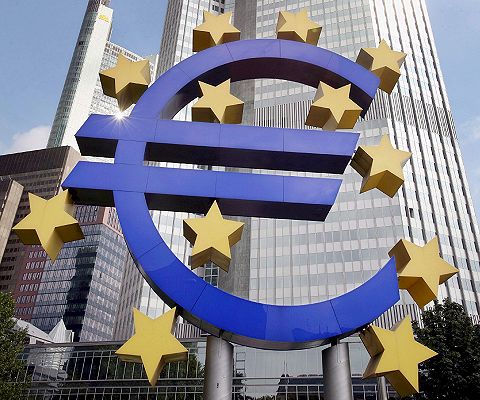
But Pervenche Beres, the chairwoman of the Economic and Monetary Affairs Committee at the European Parliament, is dismayed to see countries putting their own national interest above a coordinated European defence of the banking system: "I think this is exactly what we shouldn't be doing. It might be helpful for a moment at the national state level but if you add it all, it will just destroy the European market. And if we destroy the little thing we have, I think it will be a disaster."That's quite a tricky scenario to deal with, and it's interesting that there isn't much discussion about it going on in the US media. I'm guessing with the pace things are going it won't be long until this becomes a large issue and people start making more noise about it. It'll be interesting to see if the countries in the EU manage to get their act together in time, or even if it is a legitimate possibility that the EU would collapse.
But in the face of this kind of financial crisis the EU lacks the mechanisms for the kind of swift response that national governments can provide. The architecture of the EU is too cumbersome. Typically the Commission may propose a measure. Ministers and - increasingly - the parliament consider it, perhaps over a number of weeks. Then there is a vote, and then agreement at heads of government level. It can take years to pass a single piece of legislation - hardly a recipe for the kind of decisive action that is needed in a situation that seems to change by the hour.
Besides which the managing of economic policy is one area that nation states jealously guard. This would move the EU on to very tricky ground. That is not to say a common approach will not emerge. For example, as more EU countries announce guarantees for savers, pressure builds on those countries that are holding back.


