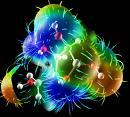
The HD format was a huge leap over standard definition TV. With widescreen, more screen space is available and consequently you get more details. It has already worked well for DVD's, and now TV programming is benefitting from this too. Also, higher pixel counts means better detail of what's on screen. You can see the mist in the air, sharpness of a basketball court, and tiny particles in the ocean. Similar to this, BDTV will give viewers even higher levels of detail. See the following diagram for a comparison.

|

|
|
|
SDTV (Standard Def) Pic from Wikipedia |
HDTV (High Def) Pic from Wikipedia | BDTV (Best Def) |
While with HDTV you could see individual pores in someone's face, now you can see what's in those pores! Also, HDTV introduced some new ways of displaying content to the highest quality such as DVI and HDMI connections. But with BDTV, the options have been made much more flexible. Now you can connect with the old composite, component, VGA, DVI, HDMI, S-Video, and Coax connections, but you can also use any of the new formats: BDMI, BDVGA, BDS-Video, BDCFSIITHQ (Best-Definition Cable For Sending Information In The Highest Quality), and the IEIEIII (Interface Enabling Interfacing with External Independent Interfaces Interface).
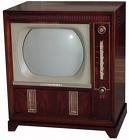
A prototype of a typical BDTV set
Finally, to reduce the hassle of shopping that HDTV introduced with needing to compare details like type of HDTV (LCD or Plasma), number of lumens (brightness), contrast ratio, highest picture resolution (480p, 720p, 1080i, etc), upscaling ability, etc., there is just the new BD-Factor, which is a measure on a scale of 0-100 of how much the high quality causes people watching the TV to wet themselves with excitement.
Warnings: Long-term exposure to BDTV may trick the viewer into believing the image is 3D because it is so amazingly high quality. However, don't attempt to interact with TV shows and sporting events as this will most likely result in injury.
More information can be found right here.