





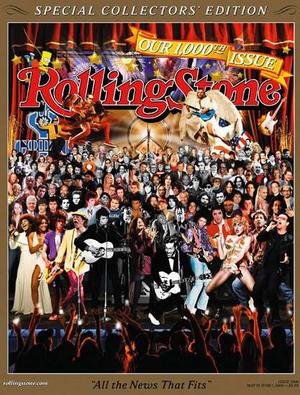
Rolling Stone magazine celebrates its 1,000th issue this week with a burst of rock 'n' roll excess: a glitzy Manhattan party with the Strokes as house band and a 3-D cover that mimics the Beatles' "Sgt. Pepper" sleeve and cost nearly $1 million to produce.
The 3-D cover is pure Wenner. Much like Beatles fans pored over the pastiche of faces on "Sgt. Pepper," he wants readers to study his cover for their own cultural reference points. There's Chuck Berry duck-walking, Madonna grabbing her crotch, Bono with a microphone and even _ upon very close inspection _ Waldo.
Wenner believes it's the costliest magazine cover ever. He denies with an expletive reports that the magazine's publisher, Steve DeLuca, left in February because his boss was pinching pennies on the party.
The issue is clogged with details like Wenner's favorite cover (Annie Leibovitz's portrait of John Lennon and Yoko Ono taken hours before Lennon was shot) and the most memorable cover headline ("He's Hot, He's Sexy and He's Dead" about Jim Morrison). Mostly, it's a nostalgic look at a time when the magazine spoke for a generation and an art form.
The end of the article also contains a great exchange between Rolling Stone and Blender magazines:
No other music magazine "has put a glove on us editorially," Wenner said.
"Our competitors _ God bless them all _ you can't think of one memorable article, interview or issue they've ever done, whereas Rolling Stone keeps knocking them out of the park," he said. "Can you think of one great Blender issue?"
Retorted Craig Marks, Blender editor in chief: "Of course I can. How about the issue we did featuring the pampered offspring of such baby boomer legends as Art Garfunkel?" he said. "Oh, wait. That was Rolling Stone. OK, then, how about the one where we broke the news that Jim Hendrix was still dead?
"Shoot, that was Rolling Stone, too. Perhaps if Jann wasn't so busy reliving his magazine's bygone glory years, he'd realize that music fans _ not to mention contemporary superstars U2, Gwen Stefani and Coldplay, among many _ have long ago turned away from their dad's publication and instead turned to Blender."
Marks wouldn't talk further about his competitor unless it was for an article that equally discussed Blender's fifth anniversary.
Blender clearly rattled Rolling Stone at the outset. While "it hasn't proven to be real competition," Wenner said, he admitted to stealing ideas like running more and shorter music reviews.


