Wed, May 3rd, 2006 | 1:46pm |
Internet - Ask
I saw a story over at Search Engine Watch Blog about ask.com's rebranding campaign now that they've dropped Jeeves. It mentioned that in the next round of advertising,
Ask is going to emphasize their understanding of "concepts" which other search engines can't. For instance, searching for "pimped out cars" will yield results that contain not just those keywords, but other results that also include words like "tight" and "phat."
I also recall how back in the day the big emphasis with Ask Jeeves was in their ability to answer searches posed as normal questions, such as "
Where is Fort Knox?" I decided to check out how some Ask results stacked up to Google.
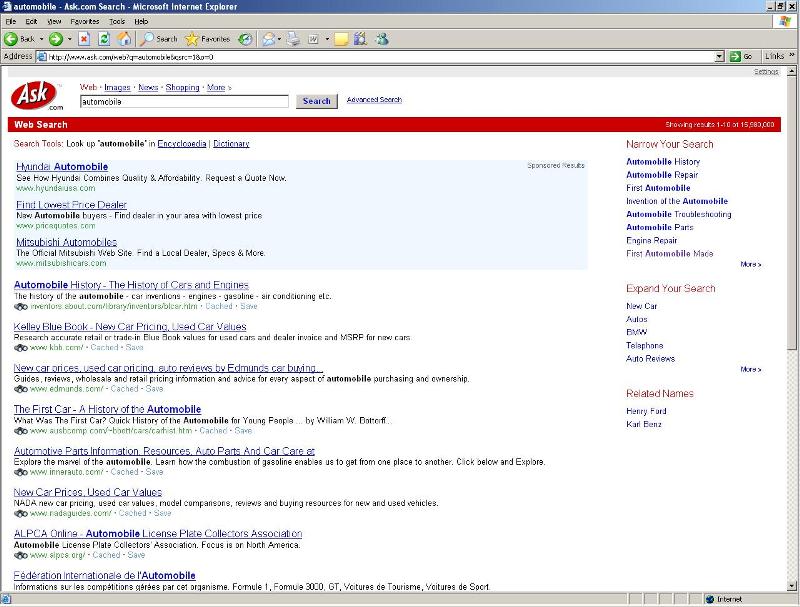
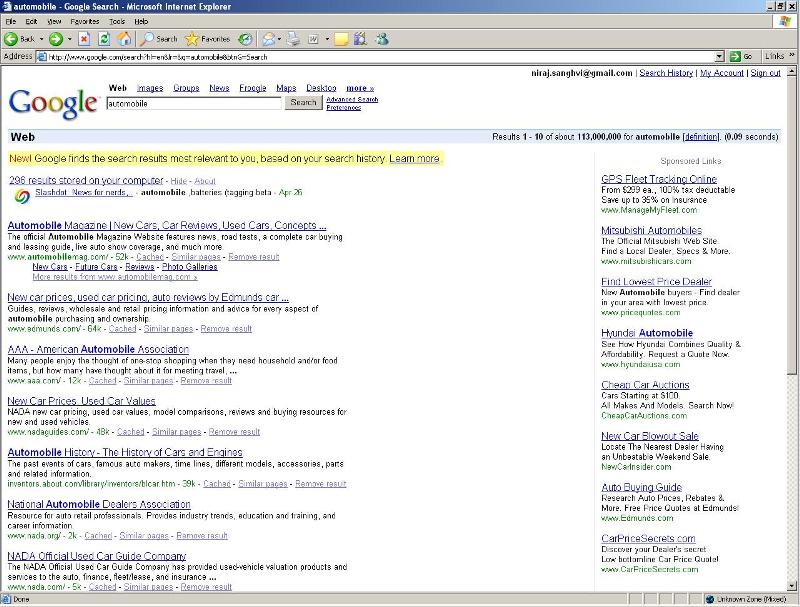
First I decided to check this new concept-understanding. I ran a search for "automobile." As you would expect, Google and Ask yielded fairly similar results. But Kelley Blue Book, an excellent resource for car buying, appeared as the second result on Ask, while it did not even appear on Google's first page of results, probably because it does not contain the term "automobile" but rather "car.":
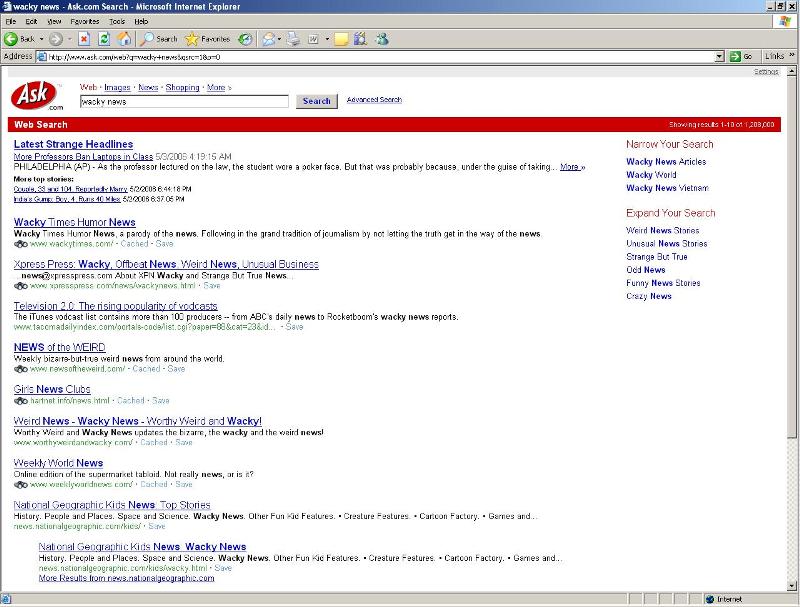
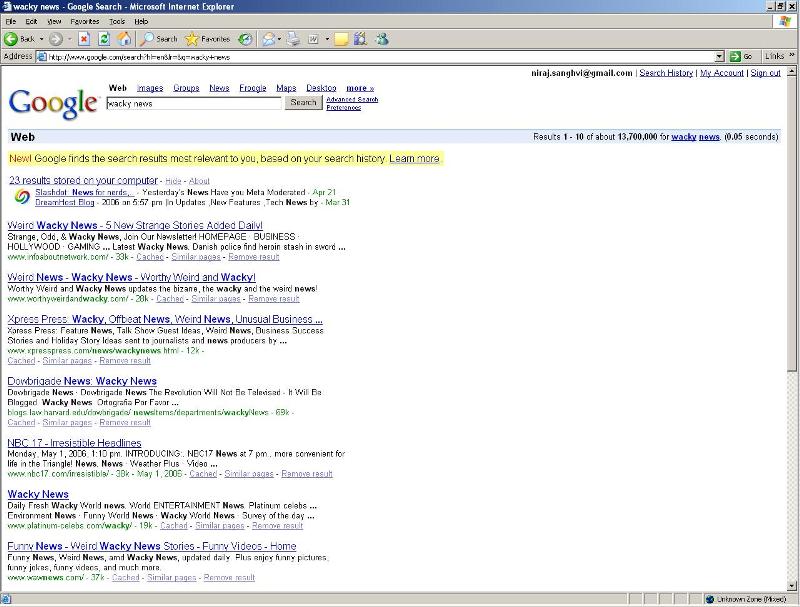
To further test, I searched for "wacky news" to see how Ask might differ. It was apparent from the top right of the search results page that they were not just looking for wacky, but also "strange," "unusual," "odd," "funny," and "crazy" news stories (seen in the "expand your search" section in the screenshot). On the other hand, if Google results returned any pages with these terms, it was only coincidental as the page had to contain the term wacky. On Ask, several pages did not contain the word wacky at all, indicating it had searched on related terms as well:
It looks like Ask has managed to provide more relevant results by searching on related queries and displaying them along with other results. The "Narrow Your Search" and "Expand Your Search" sections on the top right of the results page also seemed to contain highly relevant searches that could help you find exactly what you're looking for, and this is a nice feature.
Next I tested the ability to answer questions, a feature that all of the major search engines seem to be trying to solve.
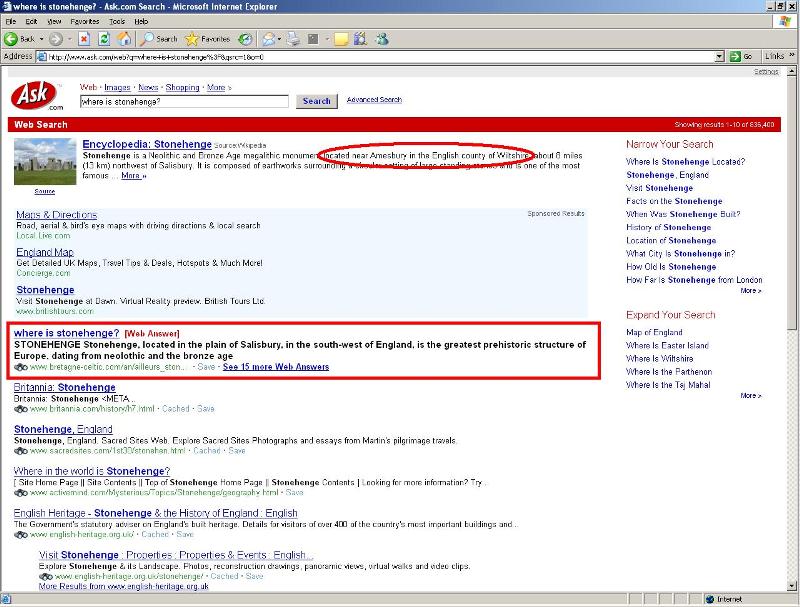
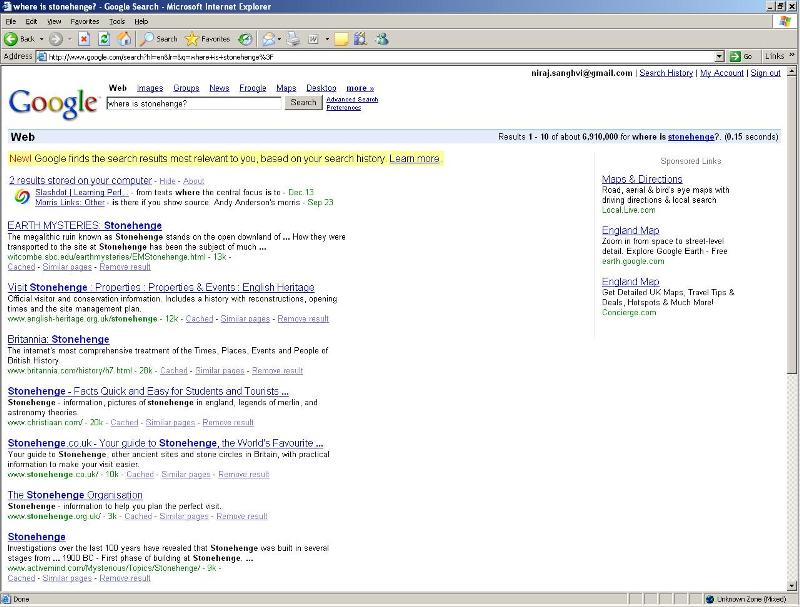
To test the ability to answer questions, I started simple. I asked "where is stonehenge?" Surprisingly, Ask gave me two well highlighted answers (one was even marked "Web Answer"), while Google performed poorly. The first Google result actually contained the answer, however the excerpt on the results page read "The megalithic ruin known as Stonehenge stands on the open downland of..." It cut off the answer! Also, somehow the question did not trigger Google's Onebox.
The red highlighting of answers on the Ask page was done by me.:
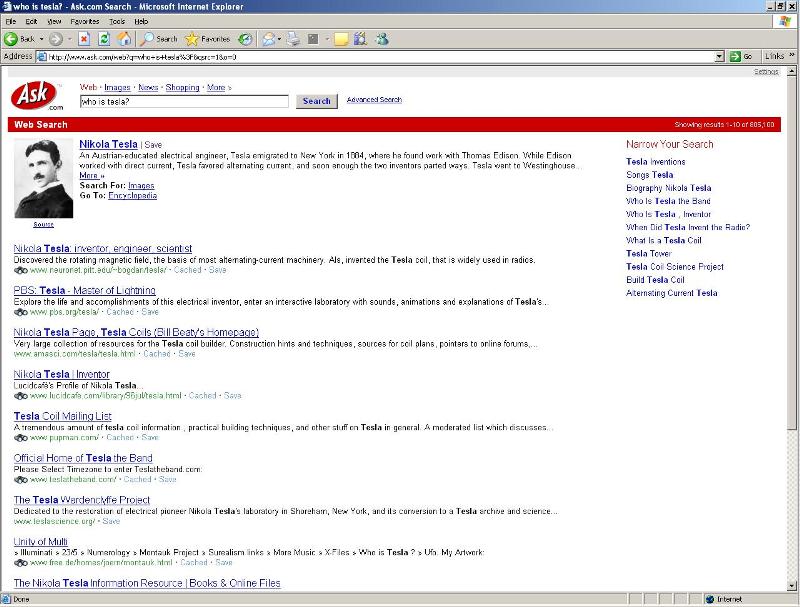
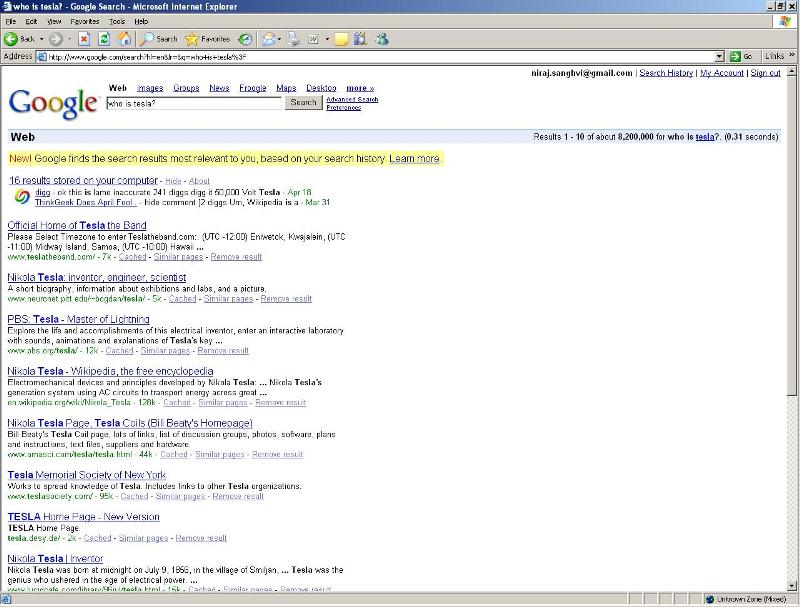
As a final test, I decided to ask "who is tesla?" to see how well the search engines could find an answer. My expectation was both would return biographical excerpts about Nikola Tesla. Google's first result was for the homepage of Tesla, the rock band :) Ask on the other hand, had a picture of Nikola and a biography as an answer, and the first result also was a webpage about him.:
This was by no means exhaustive, and obviously I was picking terms to emphasize the features that Ask has been touting. However, it is interesting to see someone coming up with some more relevant results than Google on some queries. Ask has innovated by searching for related terms, though it'll be interesting to see if this ends up cluttering results with irrelevant entries. They also seem better at recognizing and highlighting answers to questions.
It should be noted that Google has not been stagnant on the search end either. Besides their ongoing algorithm improvements, their OneBox results have gotten a lot better, especially with different tie-ins to
travel websites,
job listings, and much more.







Posted by: Anonymous on May 3rd, 2006 | 2:44pm
Ask may return better results, but whats the point of it return "wacky car" when it can't indicate to my if its up for "sale" and where its "located" -- you see where the paradigm is moving.. ??